Design
I like it when the pieces come together.
A screen that makes sense. A room that feels settled. A complicated idea finally finding a shape you can work with.
I enjoy figuring out how to get there. Part of it is instinct, part of it is structure, and quite a lot of it is asking why something feels harder than it should.
Design for humans.
After years of helping people with technology, I have very little enthusiasm for making them feel they need a manual just to get started.
I want someone to feel welcome using what I've made. To know where they are, understand their choices, and take the next step without having to guess what I meant.
Sometimes that means adding a label or a little explanation. A beautifully empty screen isn't much help if you're standing in front of it wondering what to do.
Find the friction.
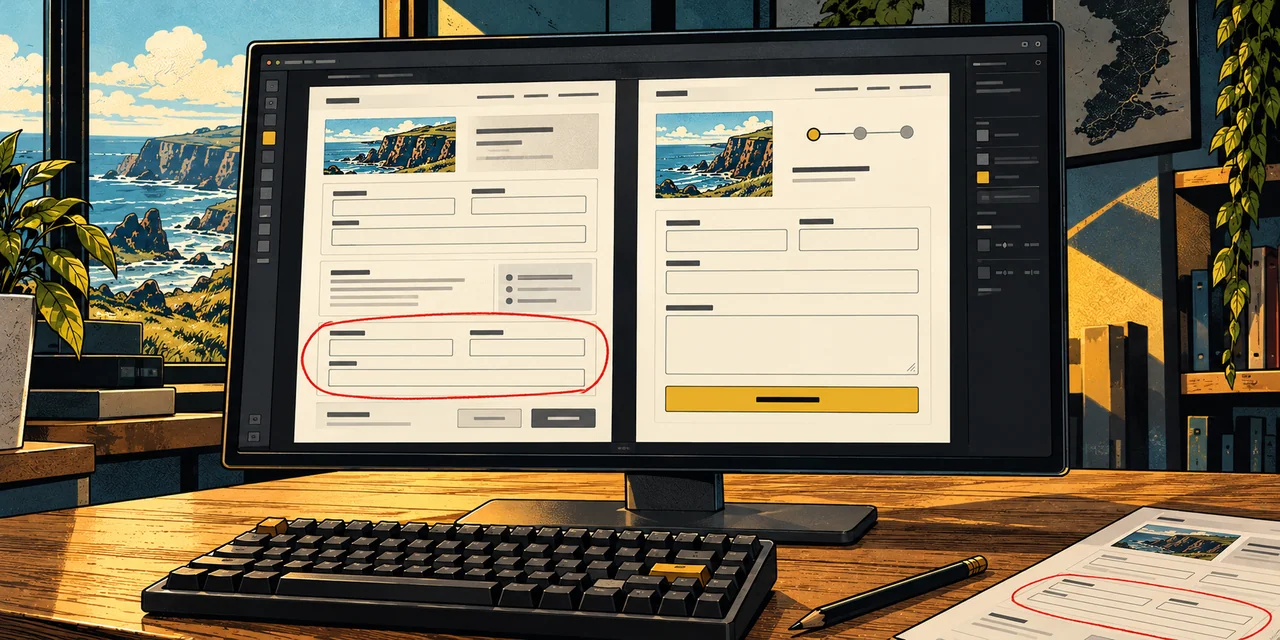
I notice the small things that make a task unnecessarily awkward. Entering the same information twice. Going back and losing everything. A button whose meaning only becomes clear after you've pressed it.
That's usually where I start pulling at the thread. What is the person trying to accomplish, and which part of this could we make easier?
It can lead to a better flow, a small tool, or simply clearer words. I like the point where the workaround stops being necessary.

Structure before styling.
I like designing frameworks. Give me a tangled problem and I'll start separating the pieces: what belongs together, what depends on what, and which question we need to answer first.
That gives me somewhere to put the ideas as they develop. Then I can move from the person and the purpose into content, layout, interactions, and the finer details.
Symmetry, thirds, and a consistent spacing rhythm help me find the balance. They're useful guides. I still want the finished thing to feel natural, rather than as though the grid is in charge.
Keep people in control.
I like being able to look around before I commit. To change a choice, correct a mistake, or go back without wondering what I've just broken. I want to give other people that same room.
Where am I? What can I do? What happens next? How do I go back?
Those answers should be easy to find, with costs and consequences clear before a decision.
That care has to survive beyond the ideal view on my screen. A phone, a keyboard, larger text, or switching off animations shouldn't turn a straightforward task into a puzzle.

Give it some character.
I once found a nearly pristine copy of Ferrari: Meet the Legend and then found myself debating whether I wanted a giant bright-red book living on the coffee table.
I liked the book. I just hadn't offered it the entire room.
That's the sort of detail I get caught up in: how color, material, light, and proportion work together. I want things to have personality, whether it's a room or this illustrated little corner of the internet. The pleasure is finding a place for it all.